Grapes Varieties

cepages

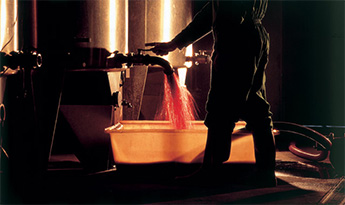
The Côtes de Bordeaux white wines are mainly crafted from the Cabernet Sauvignon associated to Semillon and Muscadelle. The red wines are mainly elaborated with Merlot (because of chalky and clayish soils) blended with Cabernet Sauvignon, Cabernet Franc and Malbec. One plot is harvested after the other, according to the grape varieties. Then, in accordance with their origin the grapes follow different procedures. The grapes for red wines just arriving in the cellar are crushed and destemmed to release their juice and pulp.

Wine making process :

Bordeaux wines are still traditionally made.

1. Maceration :

White berries are pressed immediately after being crushed or after a short stay in their skin (maceration)

For the red varieties, the must obtained is put into a tank to go trough the process of 2 or three weeks maceration.The tannic elements and the color of the skin diffuse in the fermented juice. The contact between the liquid (must) and the solids elements (skin, pips and sometimes stem) will give body and color to the wine. At this stage, anthocyans and tannins from skins are extracted during the pumping over (also called remontage).

2. Fermentations :

The alcoholic fermentation lasts 5 or 8 days for the red wines and 7 to 10 days for the white wines. Fermentation is a natural process. The yeasts living in the grapes change the sugar contained in the must into alcohol and carbonic gas The winemaker assists the action of the yeasts by maintaining the temperature around 28 / 30°C - 86 ° F. for the red wines and 18 / 20° C - 68 ° F and by ventilating the must regularly.

The second fermentation is the malolactic fermentation (only for red wines). It is the process during which the malic acid of wine changes into lactic acid and carbonic gas under the action of bacteria living in the wine. Malic acid is harsh, it is changed into lactic acid supple and stable.

3. Raking :

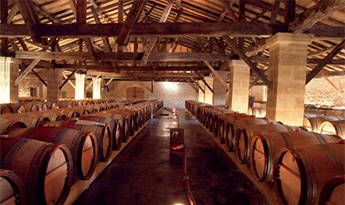
As soon as the fermentation ends, the wine is separated from the solids, the pomace. This operation is the racking. StabilizationThe wine making process is finished but the wine is not. To be able to age and to improve the wine must be clarified again. After that the beverage will be put in oak casks or into vats to be bred.

4. Blending :

It is necessary to balance the grape varieties, the "terroirs", the crops date leading to one or several cuvees.Each step of the breeding is decided in accordance with the winemaker tasting and his savoir faire. Every year, the wines are put through a statutory tasting test to deserve the appellation.


PREMIÈRES CÔTES DE BLAYE

Vine varieties :

Red : 70 % Merlot, 20% Cabernet-Sauvignon, 10 % Cabernet Franc and Malbec.

White : essentially Sauvignon, Muscadelle and Semillon.

Tasting :

The Côtes de Blaye wines are fine for mainly crafted from Merlot.

They offer a superb colour are very fruity and supple. The White Côtes de Blaye have broom and citrus fruits aromas that caracterize the Sauvignon.

Good for ageing.


CÔTES DE CASTILLON

Vine varieties :

Red : 70 % Merlot, 20% Cabernet Franc, 10 % Cabernet Sauvignon

Tasting :

The wines have a dark ruby colour. Their bouquet expresses concentration.They can range from prune, leather, game, undergrowth to small ripe red berries.

They are fruity and full bodied wines.

Côtes de Castillon have a big capacity for ageing.


PREMIÈRES CÔTES DE BORDEAUX

Vine varieties :

Red : 55 % Merlot, 25 % Cabernet Sauvignon, 15 % Cabernet Franc, 5 % Malbec.

White : 70 % Sémillon, 17 % Sauvignon, 13 % Muscadelle.

Tasting :

The red wines are nearly black. Delicate aromas and rounded mouth. Superb structure.

They can be drunk young but it is worth waiting ( 4/10 years, even more sometimes). Body becomes supple, mouth gets more and more rounded. Aromas are then much more complex and strong.


CÔTES DE FRANCS

Vine varieties :

Red : 50 % Merlot, 25 % Cabernet Franc, 25 % Cabernet Sauvignon.

White : 60 % Sémillon, 20 % Muscadelle, 20 % Sauvignon.

Tasting :

Full coloured, robust, they are quite fleshy.

Matured in barrels, the white wines range from honey and pine apple to citrus fruit. The attack is lively to evoluate to richness and style.


Réferencé sur www.clictout.com - ClictoutDEV - Tous droits réservés [C'Global - 2008]